How to Frame and Protect Art Prints
Put the print beside the empty frame before you order the mat. If the opening hides a pencil signature or cuts off a hand-torn edge, the finished frame will hide it too. Mark the area you want to see on a paper copy and take that copy to the framer.
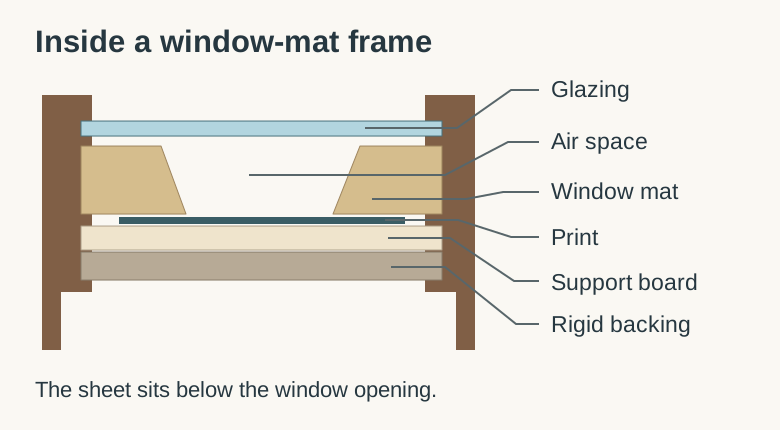
Window mat for a clean border
The beveled opening can cover the outer margins while keeping the image and signature visible. Ask for conservation-quality cotton or purified wood-pulp board. Have the framer measure the opening against the actual sheet. The paper needs room to move beneath the window.
Float mount for a deckled edge
A float mount shows the whole sheet against a backing board. It works well when the irregular edge is part of the image. Ask how the sheet will be supported and removed later. The framer needs enough space above the highest point of the paper, including any natural wave.
A narrow frame without a visible mat
A spacer along the inside perimeter can keep glazing off the print. Ask how the edges will be supported and whether the frame lip will cover the signature. Pressing the paper flat against the glass can leave it stuck to the surface if moisture enters.
Glass or acrylic? Ask about the wall and the trip
Glass resists everyday scratching but weighs more and can break. Acrylic is lighter and less prone to shattering, which matters for a large frame or a shipment. Ordinary acrylic can attract loose media through static. Tell the framer about any pastel, charcoal or powdery hand-coloring so they can specify suitable glazing.
UV filtering and reflection control do different jobs
UV-filtering glazing reduces ultraviolet exposure. Anti-reflective treatment helps you see past room reflections. Ask the framer which features the quoted glazing includes. A clear view through expensive glazing still leaves the print exposed to visible light.
What holds the print in place?
Ask for the mounting method in writing. Suitable corners or edge strips can support some sheets without adhesive on the art. A framer may recommend Japanese tissue hinges with wheat starch paste for others. Ask for stable backing and a board that has passed the Photographic Activity Test when framing photographs. Permanent dry mounting can change the object you bought.
Between displays
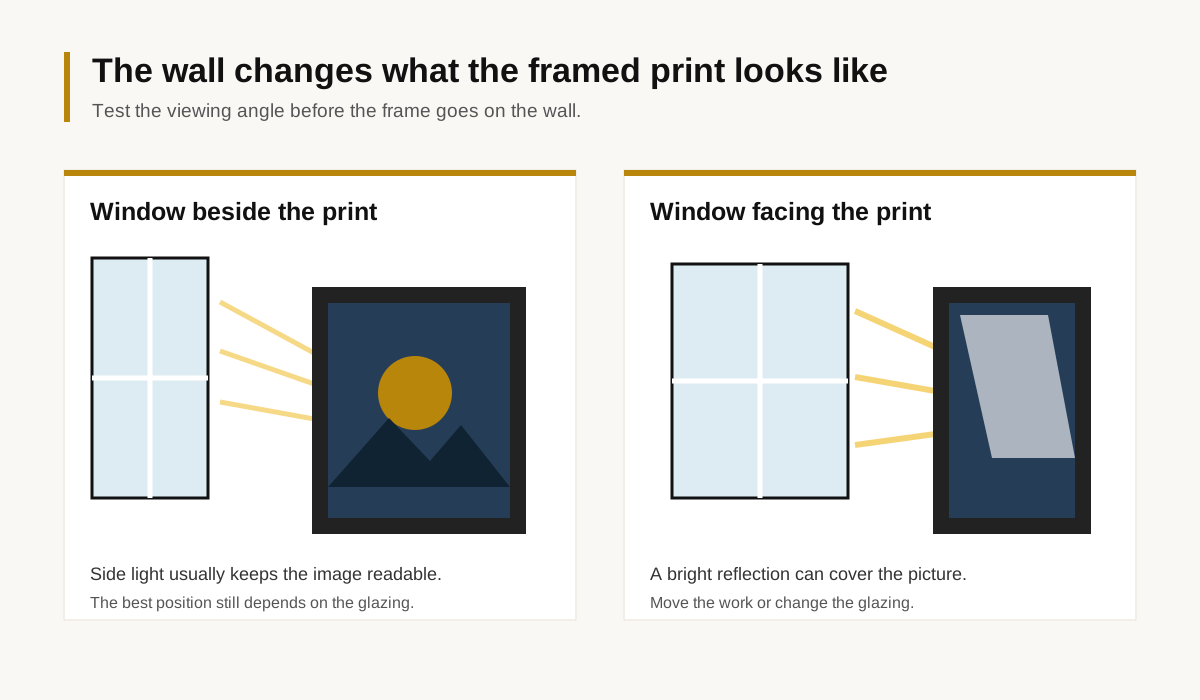
Store loose prints flat in suitable conservation folders or boxes, supported on a shelf above floor level. Choose a room with stable conditions away from leaks, radiators and direct sun. Keep the invoice with your records and note which sheet is in each folder. If a wall gets a daily strip of sunlight, hang a display copy there and keep the original elsewhere.